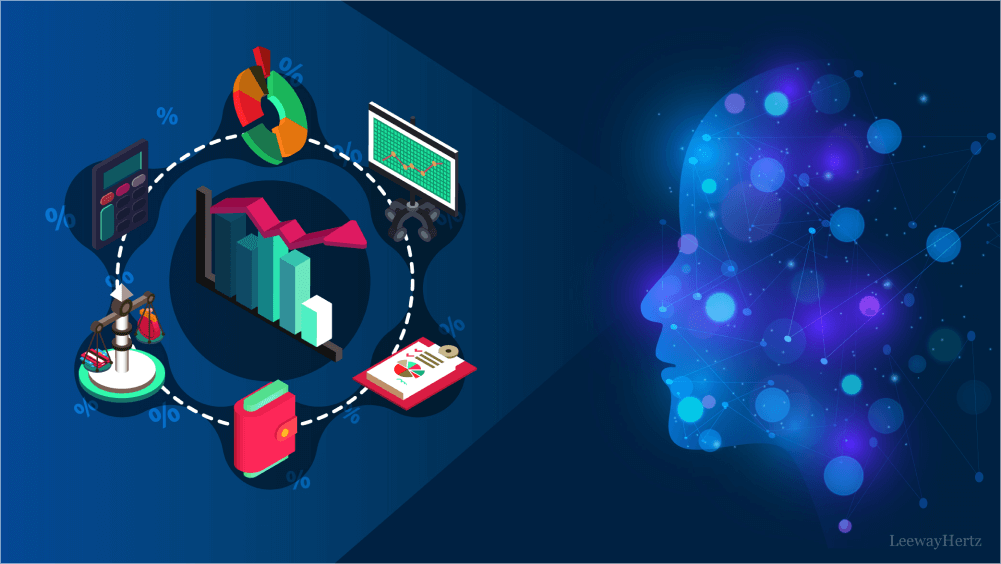

The New Age of Customer Intelligence
In today’s digital economy, understanding customers has become one of the most important factors determining business success. Companies no longer compete only through products, prices, or services. They compete through experiences, personalization, speed, and their ability to anticipate what customers need before those needs are clearly expressed.
For decades, businesses collected customer information through surveys, sales reports, customer service interactions, and market research. These methods provided valuable insights, but they often offered only a limited and delayed understanding of customer behavior. Organizations could analyze what customers had already done, but predicting what they would do next was much more difficult.
Artificial intelligence is changing this reality. AI technologies are transforming massive amounts of customer data into meaningful insights that help businesses understand motivations, preferences, emotions, and future behaviors. Instead of simply collecting information, organizations can now interpret it, predict patterns, and use it to make smarter decisions.
The transition from data collection to intelligent decision-making represents a fundamental shift in customer experience management. AI allows companies to move beyond basic analytics and create deeper, more dynamic relationships with customers.
The future of customer understanding is not about having more data alone. It is about having the ability to transform data into knowledge, knowledge into action, and action into better customer experiences.
The Evolution of Customer Understanding: From Data Collection to Intelligence
Customer understanding has always been central to business strategy. Companies have traditionally invested significant resources into learning about their audiences, identifying market trends, and improving customer satisfaction.
In the past, customer insights were often based on demographic information, purchasing history, and direct feedback. Businesses analyzed sales numbers, conducted focus groups, and reviewed customer complaints to understand what worked and what needed improvement.
While these approaches provided useful information, they had limitations. Customer behavior is complex, and people do not always communicate their true preferences directly. A customer may say one thing in a survey but behave differently when interacting with a brand.
The growth of digital technologies changed the amount and variety of customer information available to organizations. Every online interaction, search query, purchase, review, social media engagement, and customer service conversation creates valuable data.
However, the challenge is no longer simply collecting information. The challenge is understanding it. This is where artificial intelligence creates a new era of customer intelligence.
AI can analyze enormous volumes of structured and unstructured data, identify hidden patterns, and provide insights that would be impossible to discover through traditional methods.
The Power of Data as the Foundation of Customer Understanding
Data is the foundation of modern customer intelligence. Every interaction between a customer and a company generates information that can reveal valuable insights.
Customer data may come from multiple sources, including websites, mobile applications, online purchases, loyalty programs, customer support conversations, social media platforms, and connected devices.
When combined effectively, these sources create a comprehensive view of customer behavior. Businesses can understand not only what customers buy but also why they make certain decisions, what influences their choices, and what factors affect their satisfaction.
However, raw data alone has limited value. Large amounts of information can become overwhelming if organizations lack the ability to analyze and interpret it.
Artificial intelligence provides the missing link between information and understanding. AI systems can process complex datasets, recognize relationships, and identify meaningful trends that support better business decisions.
How Artificial Intelligence Transforms Customer Data Into Insights
Artificial intelligence changes customer understanding by introducing advanced analytical capabilities. Traditional analytics often focuses on describing past behavior, while AI enables organizations to predict future actions and personalize interactions.
Machine learning algorithms can analyze customer behavior patterns and identify similarities between different groups of users. These insights help businesses understand customer preferences and create more relevant experiences.
For example, an online retailer can use AI to analyze browsing history, previous purchases, and product interactions to recommend items that match individual customer interests. A financial service company can analyze customer behavior to identify changing needs and offer relevant solutions. A customer support platform can use AI to understand conversation patterns and improve service quality.
The value of AI lies in its ability to continuously learn. As more customer interactions occur, AI systems become better at recognizing patterns and generating useful recommendations.
This creates a cycle of continuous improvement where every customer interaction contributes to deeper understanding.
Predictive Analytics: Understanding What Customers Will Need Next
One of the most powerful applications of AI in customer understanding is predictive analytics. Instead of only analyzing past behavior, organizations can use AI models to forecast future customer actions.
Predictive analytics helps businesses answer important questions:
What products are customers likely to purchase?
Which customers may stop using a service?
What type of experience will increase customer satisfaction?
When is the best moment to communicate with a customer?
These insights allow companies to become more proactive. Instead of waiting for customers to express their needs, businesses can anticipate those needs and provide solutions earlier.
For example, subscription-based companies can use predictive models to identify customers who may cancel their subscriptions and develop strategies to improve retention. Retail businesses can predict purchasing patterns and optimize inventory. Service providers can identify opportunities to improve customer engagement.
Predictive analytics transforms customer relationships from reactive interactions into proactive experiences.
Personalization at Scale: Creating Individual Customer Experiences
One of the biggest expectations of modern consumers is personalization. Customers want businesses to understand their preferences and provide experiences that feel relevant to their individual needs.
However, personalization becomes challenging when organizations serve thousands or millions of customers. Traditional approaches cannot manually analyze every customer relationship.
AI makes personalization possible at scale. By analyzing customer data in real time, artificial intelligence can help businesses deliver customized recommendations, targeted communication, personalized offers, and relevant content.
Streaming platforms use AI to recommend entertainment based on viewing behavior. E-commerce platforms use AI to suggest products based on browsing and purchasing patterns. Digital services use AI to adapt experiences according to user preferences.
Effective personalization creates stronger emotional connections between customers and brands. Customers feel understood, which increases loyalty and engagement.
AI-Powered Customer Journey Analysis
Understanding the customer journey is essential for creating successful experiences. A customer journey includes every interaction a person has with a brand, from discovering a product to making a purchase and receiving ongoing support.
Traditional customer journey analysis often relied on limited data points. AI provides a much more complete picture by analyzing thousands of interactions across multiple channels.
AI can identify where customers experience difficulties, which touchpoints create satisfaction, and how different interactions influence purchasing decisions.
For example, AI analysis may reveal that customers frequently abandon purchases at a specific stage of the checkout process. Businesses can then investigate the issue and improve the experience.
By understanding the complete customer journey, organizations can remove obstacles, improve satisfaction, and create smoother interactions.
Natural Language Processing and the Understanding of Customer Emotions
One of the most significant advances in AI-powered customer understanding is the ability to analyze human language.
Natural Language Processing (NLP) allows AI systems to understand and interpret text from customer reviews, emails, chat conversations, social media comments, and support requests.
This technology helps organizations understand not only what customers are saying but also the emotions behind their words.
Sentiment analysis can identify whether customers are satisfied, frustrated, or disappointed. This information allows businesses to respond more effectively and address problems before they become larger issues.
For example, analyzing thousands of customer reviews can reveal common complaints about a product feature. Customer service conversations can reveal recurring challenges that require process improvements.
AI transforms customer feedback from isolated comments into strategic intelligence.
Improving Customer Service Through AI
Customer service is one of the areas where AI has created some of the most visible changes. Modern customers expect fast, accurate, and convenient support experiences.
AI-powered tools help organizations provide assistance through chatbots, virtual assistants, automated responses, and intelligent routing systems.
These technologies allow businesses to handle common customer requests quickly while enabling human agents to focus on more complex situations.
However, successful AI-powered customer service requires balance. Customers appreciate efficiency, but they also value empathy and human understanding, especially when dealing with complicated or emotional issues.
The most effective approach combines artificial intelligence with human expertise. AI provides speed and information, while human agents provide creativity, empathy, and deeper problem-solving abilities.
The Role of AI in Customer Experience Strategy
Artificial intelligence is not simply a technology tool. It is becoming an important part of customer experience strategy.
Companies that successfully use AI integrate customer intelligence into decision-making processes across the organization. Marketing teams use AI insights to create more effective campaigns. Product teams use customer data to develop better solutions. Customer service teams use AI to improve interactions.
AI creates alignment between different departments by providing a shared understanding of customer behavior.
This allows organizations to move from isolated customer interactions toward a unified customer experience strategy.
The Importance of Data Quality and Responsible AI
Although AI provides powerful capabilities, its effectiveness depends on the quality of the data it uses.
Poor-quality, incomplete, or inaccurate data can lead to incorrect conclusions and ineffective decisions. Organizations must invest in strong data management practices to ensure that AI systems receive reliable information.
Responsible AI use is also essential. Companies must consider privacy, transparency, and ethical issues when analyzing customer data.
Customers expect businesses to use their information responsibly. Organizations that create transparent and trustworthy AI practices are more likely to build long-term relationships with their audiences.
The future of customer intelligence depends not only on technological capability but also on responsible implementation.
Challenges of Implementing AI for Customer Understanding
Despite the benefits of AI, organizations face several challenges when adopting these technologies.
One challenge is integrating data from different systems. Customer information is often distributed across multiple platforms, making it difficult to create a complete customer view.
Another challenge is balancing automation with human interaction. While AI can improve efficiency, businesses must ensure that technology does not eliminate the personal connection customers value.
Organizations also need skilled professionals who understand both AI technologies and customer experience principles. Successful implementation requires collaboration between data scientists, business leaders, marketing teams, and customer service professionals.
Finally, companies must continuously improve their AI systems as customer expectations and market conditions change.
The Future of Customer Understanding With Artificial Intelligence
The future of customer understanding will be shaped by increasingly intelligent AI systems capable of deeper analysis, prediction, and personalization.
AI will continue to evolve from analyzing customer behavior to understanding customer intent, emotions, and context.
Future customer experiences will become more adaptive. Digital platforms will adjust automatically based on individual preferences. Businesses will anticipate customer needs before customers actively search for solutions.
Generative AI will also play a growing role by creating personalized communication, assisting customers through natural conversations, and helping employees make better decisions.
The organizations that succeed will be those that combine advanced AI capabilities with a strong understanding of human behavior.
Conclusion: Turning Customer Data Into Meaningful Business Decisions
The journey from data to decisions represents a new era of customer understanding. Artificial intelligence allows organizations to transform enormous amounts of information into valuable insights that improve experiences, strengthen relationships, and support better business outcomes.
AI does not replace the importance of human understanding. Instead, it enhances human capabilities by revealing patterns, predicting behaviors, and providing deeper knowledge about customers.
Companies that successfully use AI to understand their customers will gain a significant advantage in an increasingly competitive marketplace. They will be able to create more relevant experiences, respond faster to changing needs, and build stronger connections with their audiences.
The future of customer experience belongs to organizations that can combine the power of data, the intelligence of AI, and the human ability to create meaningful relationships.